
Condo Bylaws
Your Condo Has a Blueprint. Have You Read It?
Every building starts with a blueprint. Before a single wall goes up or a floor gets laid, someone has drawn a precise plan that determines how everything fits together. Condominium communities work the same way, and the document at the center of that plan is the bylaws. They’re often forgotten in the shadows of the CC&Rs, but they are just as important to how the community is run.
Bylaws: The Blueprint Behind the Building
A condominium association is essentially a small, self-governing community. The declaration is the foundation, the big document that establishes the property, defines ownership, and sets the structural rules that govern the property itself. The bylaws are the operational frame built on top of that foundation. They determine the administrative aspects of how the HOA actually runs day to day, who holds the load-bearing responsibilities, and how decisions get made.
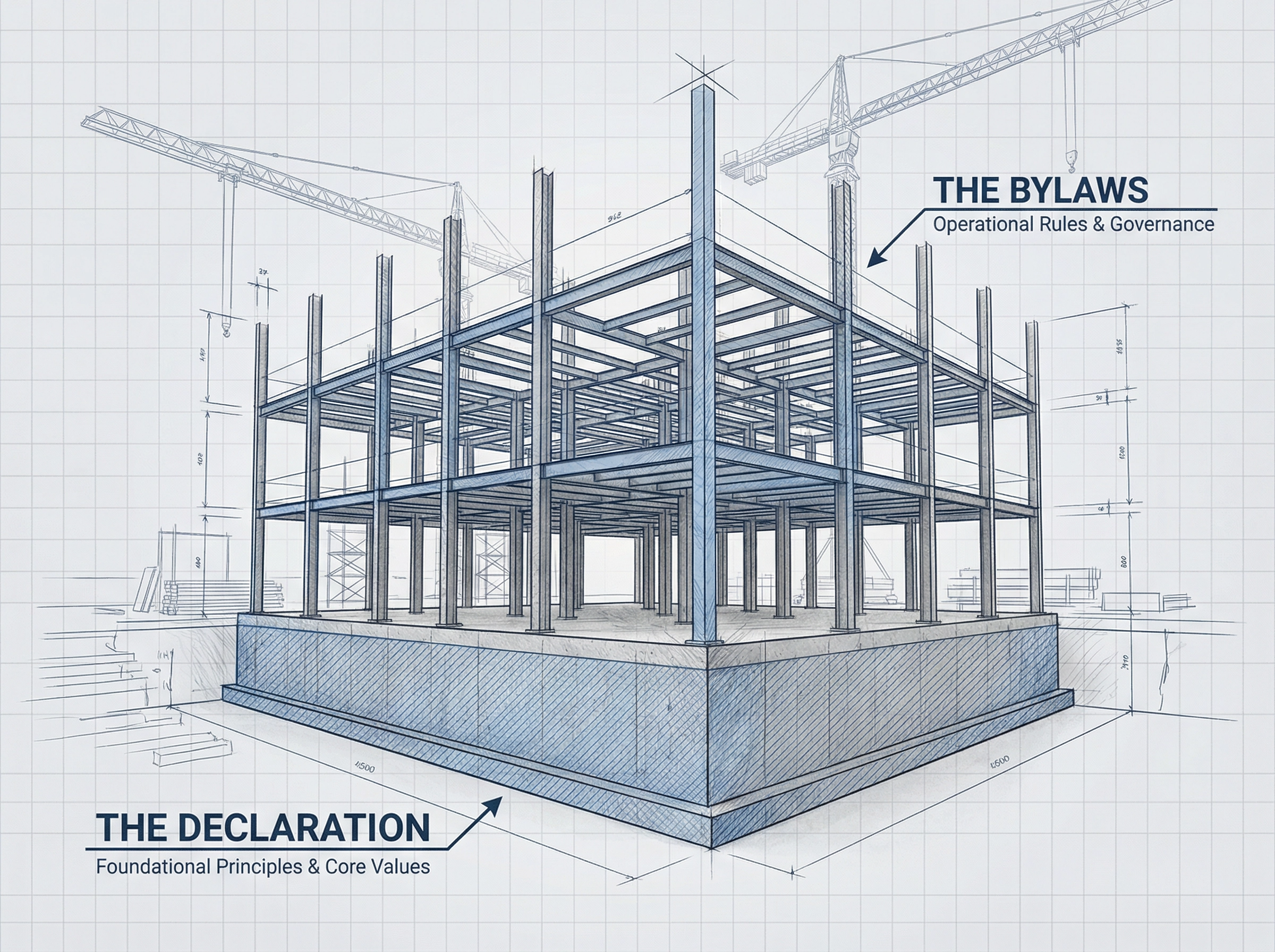
Under the Utah Condominium Ownership Act, every condo community must have bylaws governing its administration (Section 57-8-15). They are either built into the declaration itself or recorded alongside it as a separate document. Either way, they are part of the official public record, which means they are just as important to the community as the recorded CC&Rs.
What the Blueprint Actually Shows
A good blueprint does not leave anything to guesswork. Neither do bylaws. Each HOA’s bylaws will be slightly different as the document is amended and customized over time. However, according to Section 57-8-16 of the Condominium Ownership Act, any of the following may be included in your community’s bylaws:
- Information about the management committee, including how many members sit on the committee, how they are elected, their powers and duties, and how long they can serve;
- Information about how to call an annual, regular, or special meeting, including what percentage of owners need to be there to establish quorum;
- Voting thresholds for the management committee or members to take action;
- How maintenance of common areas is handled;
- How assessments are to be collected from the members;
- How the bylaws can be amended;
- Restrictions on the use of units to prevent unreasonable interference with neighboring units; and
- Anything else that might be necessary to oversee the administration of the HOA.
For homeowners, knowing what the bylaws cover means knowing what the board is actually authorized to do. For board members, it means understanding where the walls are and staying within them.
The Load-Bearing Hierarchy: What to do When Documents Conflict
Not every part of the blueprint carries equal weight, and the same is true of the documents that govern a condo community. Section 57-8-40(5) of the Condominium Ownership Act establishes a clear hierarchy of documents. The Condominium Ownership Act sits at the top. Below it comes the Utah Revised Nonprofit Corporation Act, then the declaration and condominium plat, then the articles of incorporation, and then the bylaws. Rules adopted by the management committee sit at the bottom.
When a document lower on the list conflicts with something above it, the higher level wins every time. A bylaw that contradicts the CC&Rs does not hold. CC&Rs that contradict state law do not hold either. Understanding this hierarchy is one of the most practical tools available to both homeowners and board members when trying to figure out which document actually controls a situation.

Renovating the Blueprint: Amending the Bylaws
Even the best blueprints sometimes need updates. Communities evolve, circumstances change, and governing documents need to be able to change with them. The Condominium Ownership Act builds guardrails into that process to keep it fair, and understanding those guardrails matters whether someone is trying to promote a change or make sure a change is done correctly.
The bylaws themselves establish the voting threshold required for an amendment, though that threshold still must fall within the limits the Condominium Ownership Act sets for governing documents generally (Section 57-8-16(8)). Those limits matter: after the period of administrative control ends, no governing document can require more than 67 percent of voting interests to approve an amendment. Additionally, no governing document can require the approval of any specific individual unit owner as a condition of amendment, nor can it require the approval of lien holders holding more than 67 percent of first-position security interests (Section 57-8-39(1)(a)).
Homeowner rights are a top priority in this process. According to the Condominium Ownership Act, no language in the governing documents can permanently lock owners out of the amendment process during a particular time period. Any provision that attempts to do so is invalid under Section 57-8-39(1)(a)(iii). In other words, owners always retain the ability to revisit and update their governing documents.
That said, not every part of the blueprint gets the same renovation rules. The 67 percent ceiling and related voting limits do not apply to amendments that affect only:
- The undivided interest of each unit owner in the common areas and facilities,
- Unit boundaries; or
- Unit owners' voting rights (Section 57-8-39(1)(b)).
These areas of the blueprint carry unique weight and are treated differently because changes to them directly affect the fundamental ownership structure of the community in ways that reach beyond ordinary governance. If an amendment purports to change one of the items listed above, there is no cap on the threshold the bylaws may require.
Finally, it is worth noting that these amendment provisions apply to every HOA regardless of when it was created (Section 57-8-39(5)). An older community cannot point to its age as a reason to operate by different rules. The blueprint may have been drawn decades ago, but the renovation standards apply to everyone equally.
Why the Blueprint Matters to You
A blueprint is only useful if someone actually consults it. For homeowners, the bylaws are both a shield and a responsibility. They protect by establishing consistent standards that apply to everyone, management committee members included. They obligate by requiring compliance, and ignoring them can lead to potential legal consequences (Section 57-8-8).
For management committee members, the bylaws are not background reading. They are the architectural drawings for every meeting called, every rule enforced, and every vote taken. Stepping outside them is not just a procedural misstep; it can compromise the structural integrity of the entire community.
Remember, the bylaws of a condominium community are not fine print meant to trip people up. They are the carefully drawn plan that holds the whole structure together. Whether someone just signed on the dotted line for their first unit or has been sitting on the board for years, reading the bylaws is an essential blueprint for understanding how everything in the community actually works.
Documents You Need
- Bylaws


